| Version 4 (modified by , 14 years ago) ( diff ) |
|---|
Stack Rejection; Stack Discussions
August 29, 2012
July 31, 2012
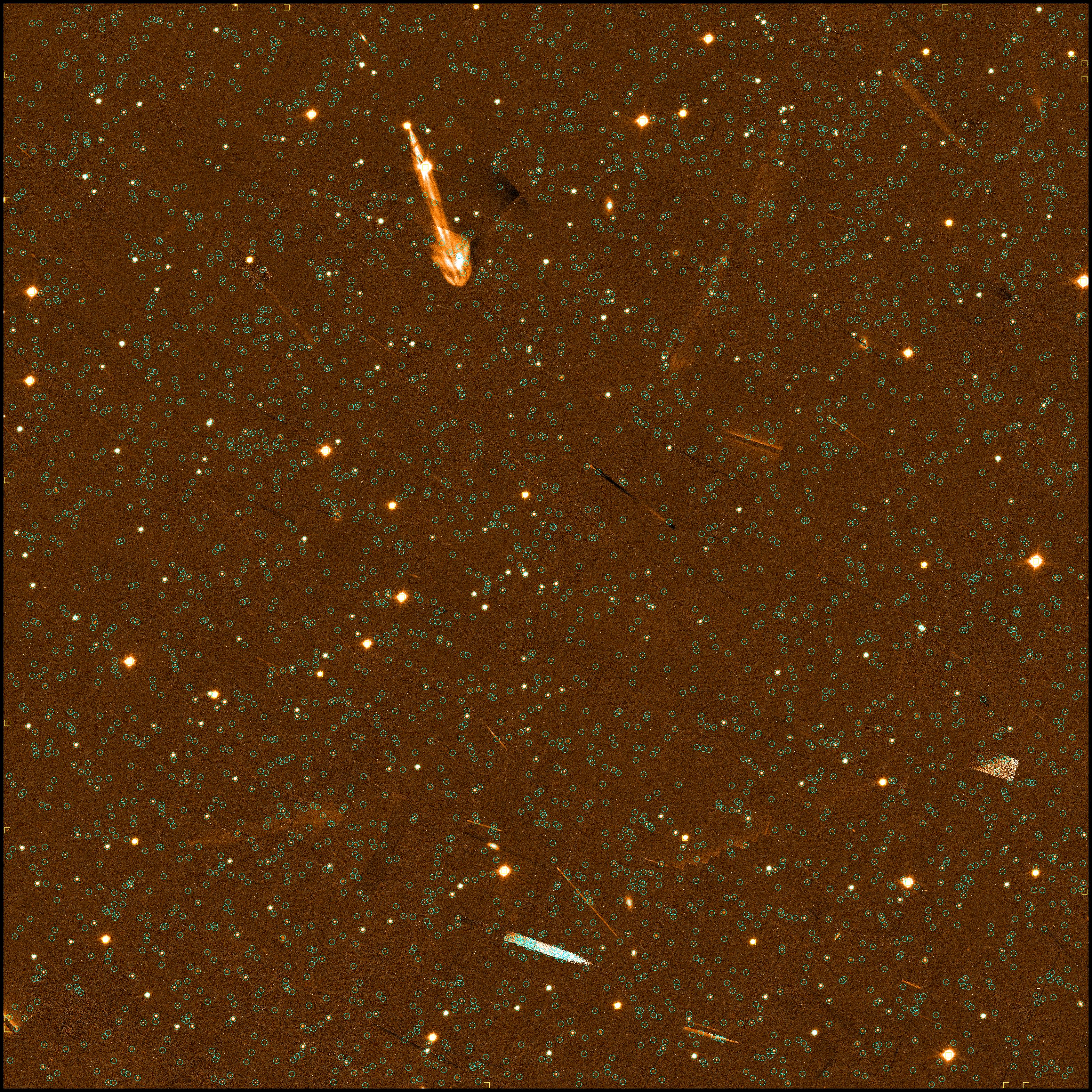
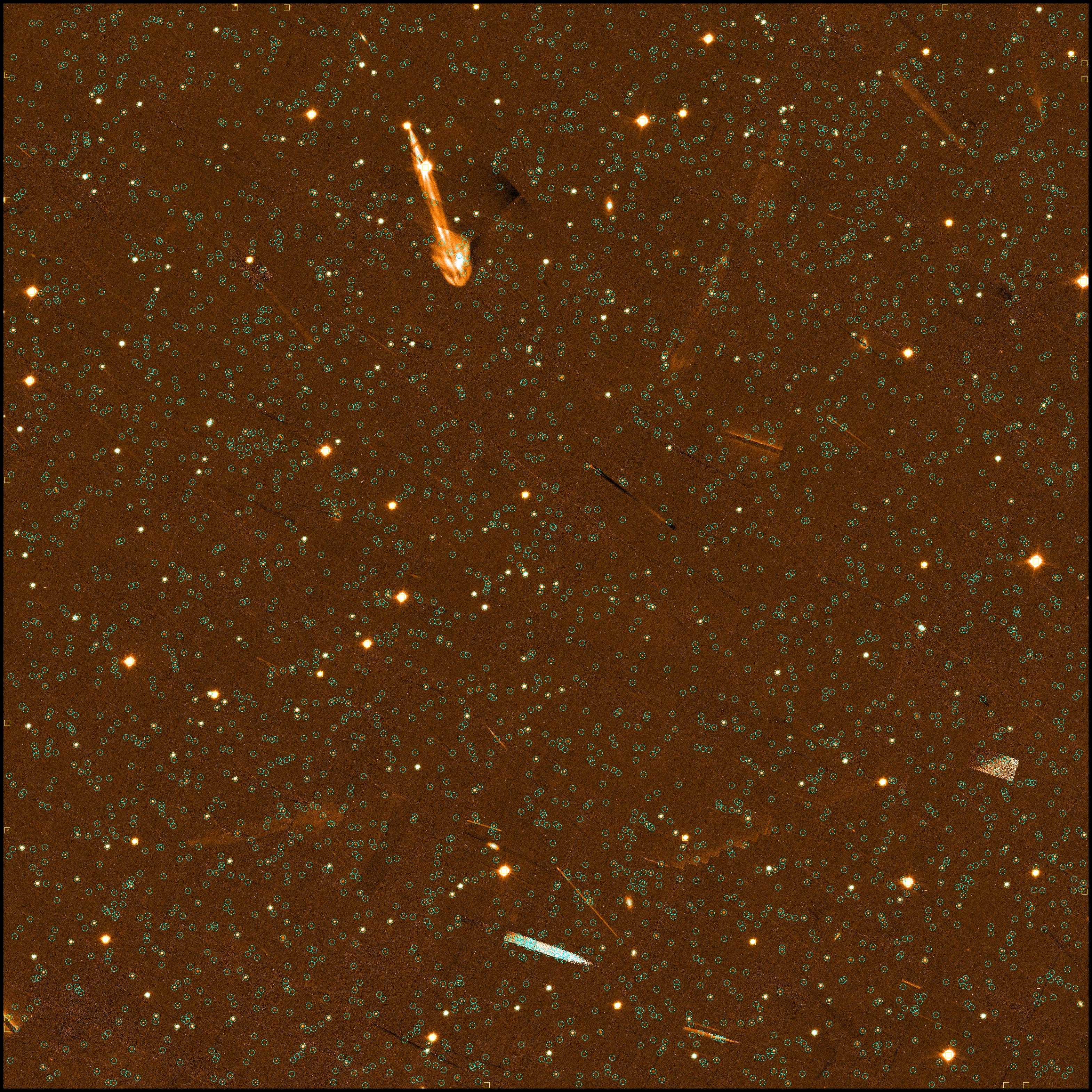
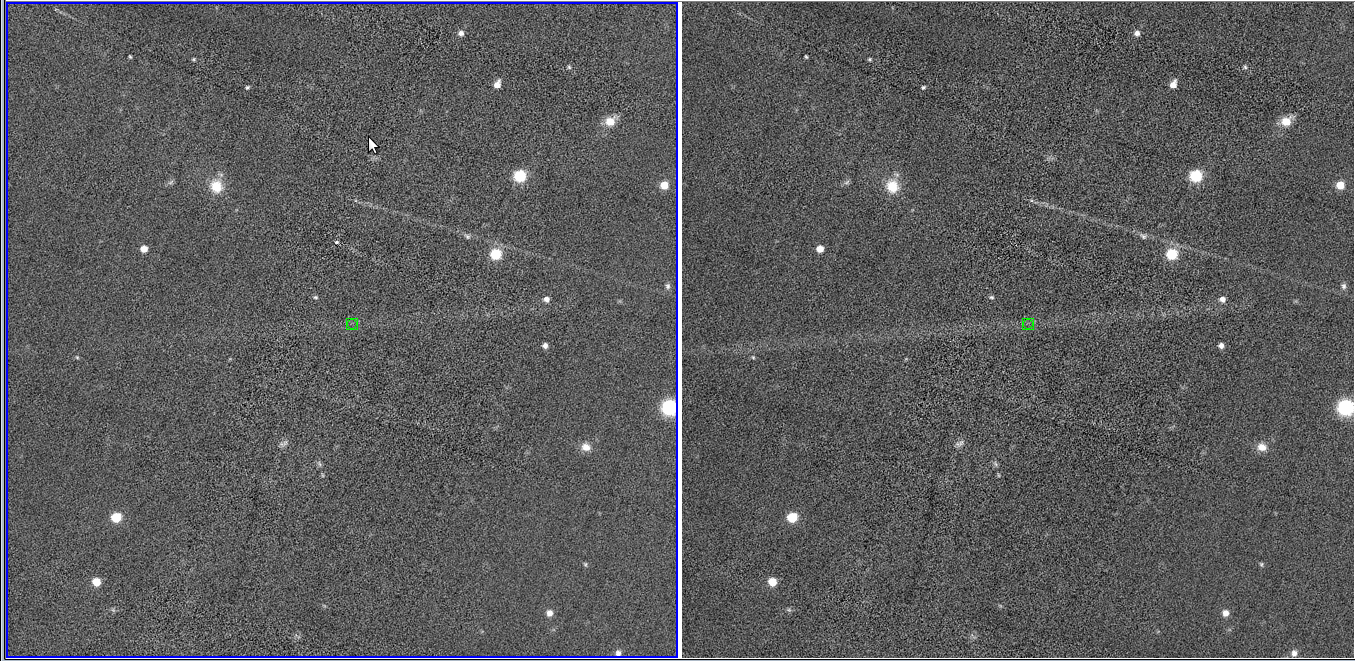
Nigel sent around a jpeg of a mean stacked image (http://astro.dur.ac.uk/~nm/mean.jpg), ignoring masking and ignoring variances. This is easy enough to reconstruct, and I did so for this example skycell (skycell.1406.045, stack_id 1033436). In addition, he overlaid the warp detections (http://astro.dur.ac.uk/~nm/meandetections.jpg) with psfQf cuts and stack detections (http://astro.dur.ac.uk/~nm/meanstackdetections.jpg) on this image. I've copied these images to this wiki to keep everything together (I've had to increase the JPEG compression to fit under the wiki filesize limit).


Comparison of mean stack to ppStack stack

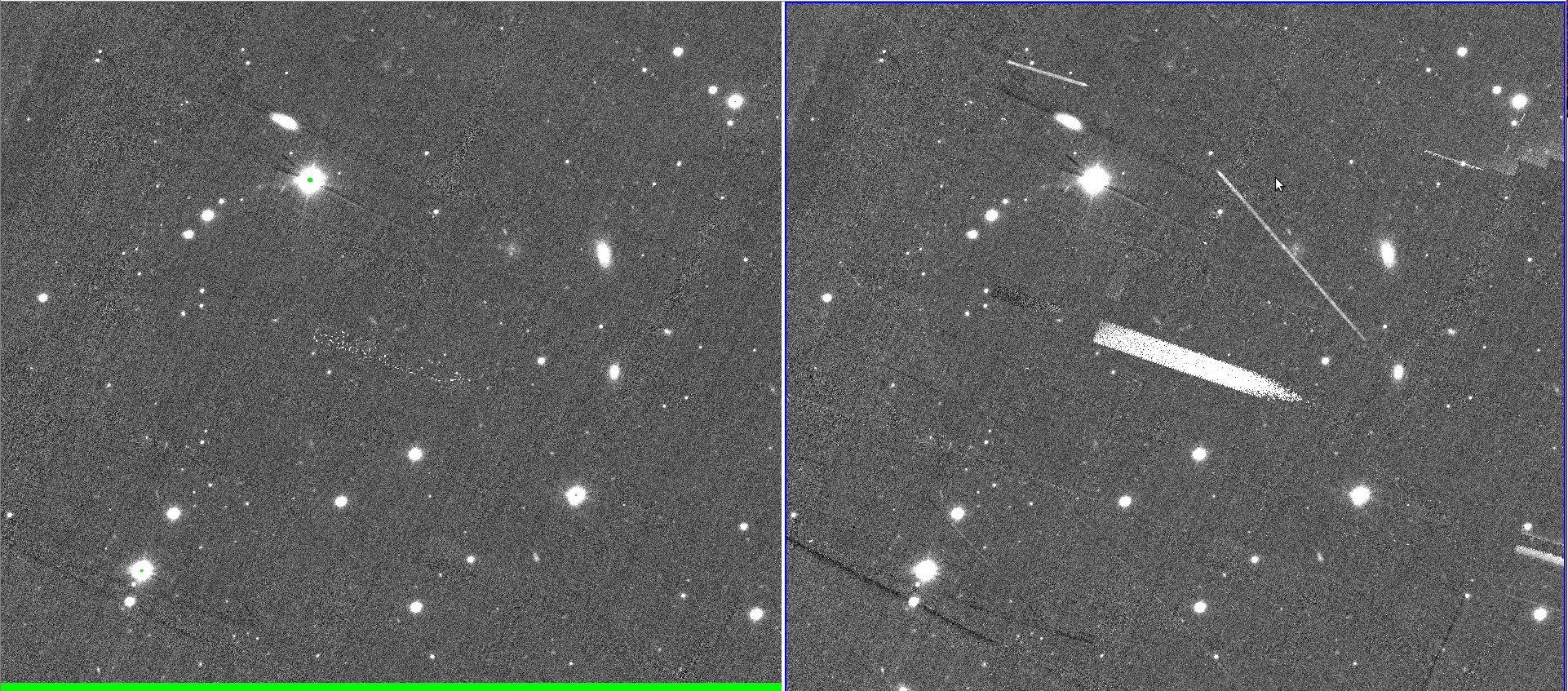
This image shows a mosaic of 20/22 inputs around the region of the reflection ghost visible in the mean image. Only two of these inputs contain this feature, so although it is obvious in the mean stack, it is largely removed in the ppStack result. We also have masks on this object, which helps rejection on most pixels, as shown by this image which is a mean combined, rejecting all input pixels that have any mask bit set. This is somewhat more conservative than ppStack, which allows "suspect" pixels to be considered for inclusion if they are consistent with the values from other inputs.


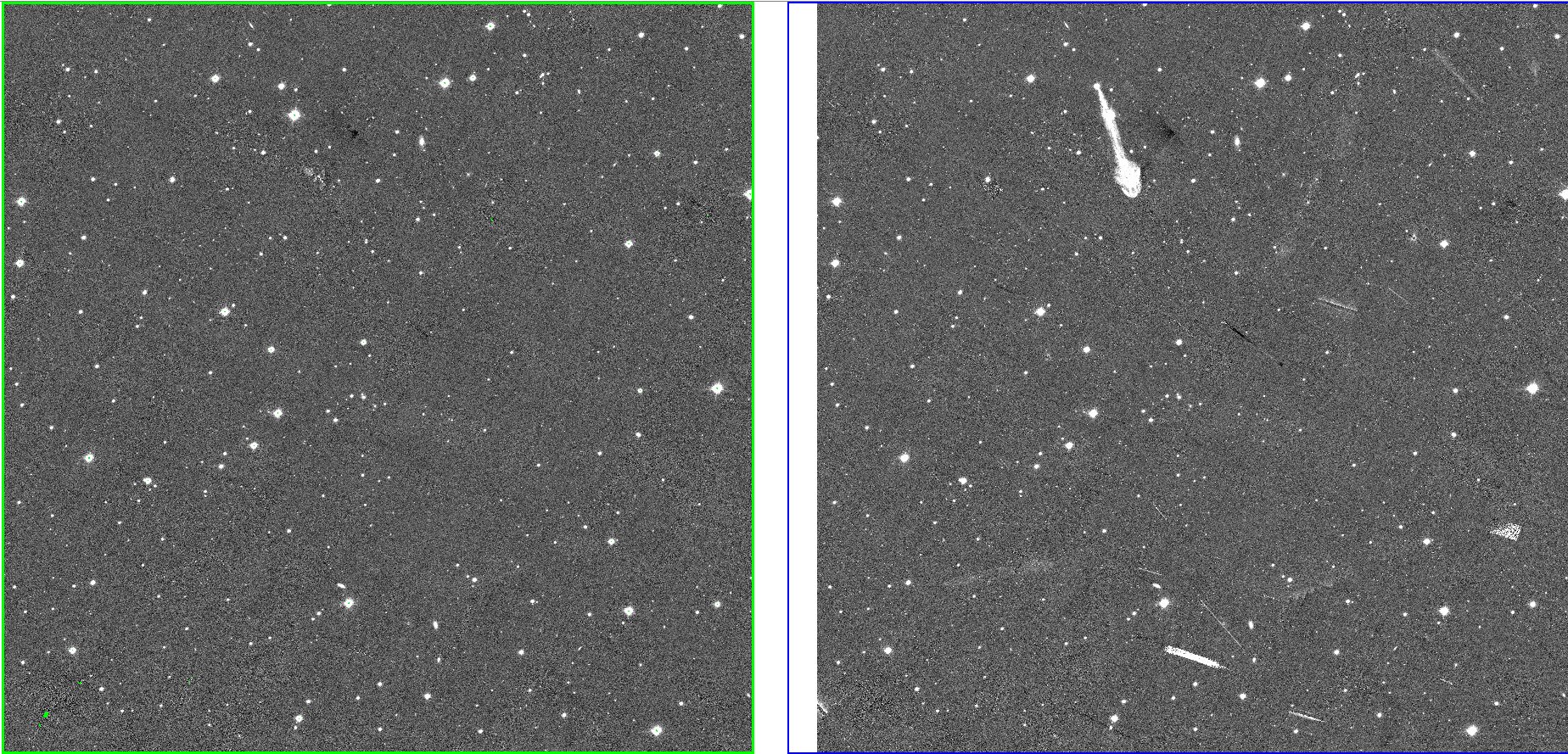
Comparing the unconvolved ppStack output (left) to the mean stacked image (right), it is clear that the majority of the non-astronomical sources are eliminated by ppStack. This includes most of the reflection ghosts, the bright amplifier, the ragged detector edge, and the bad edge cells.
Single frame detections
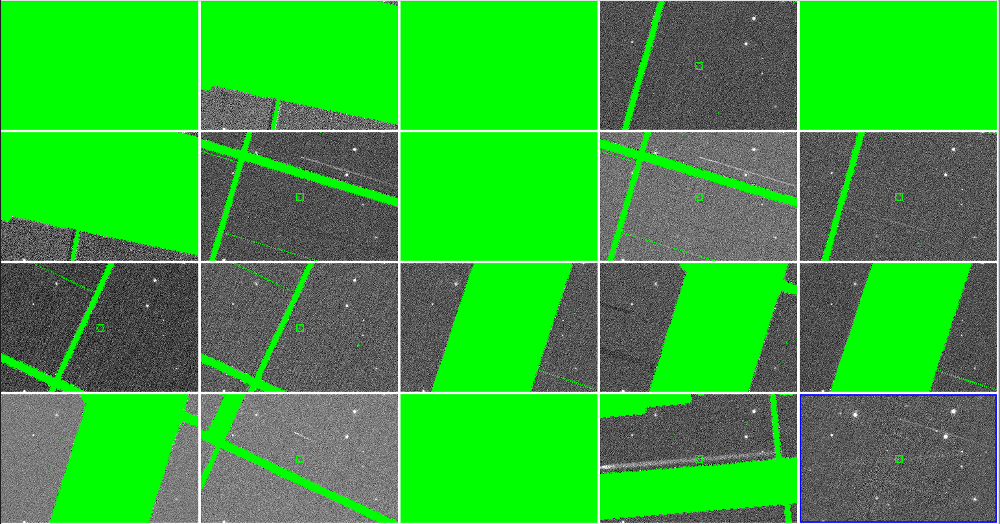
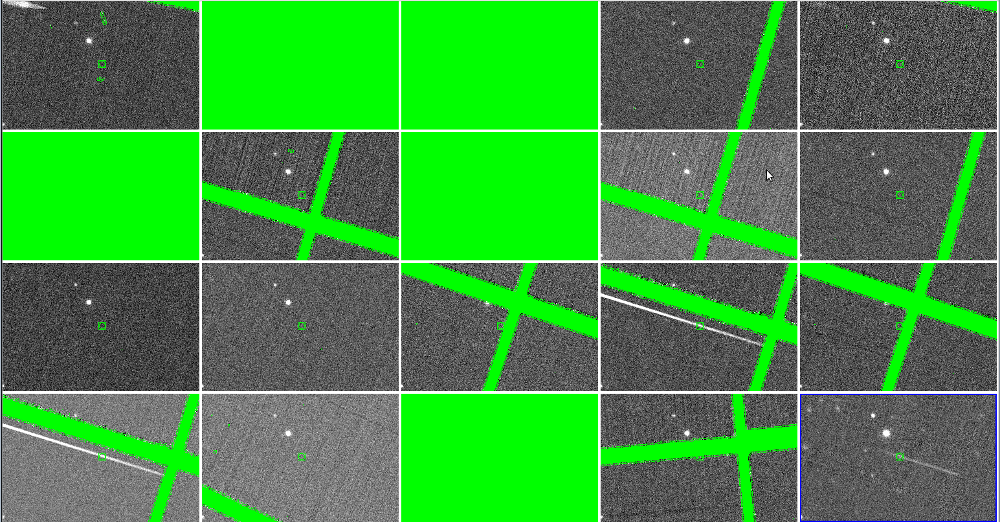
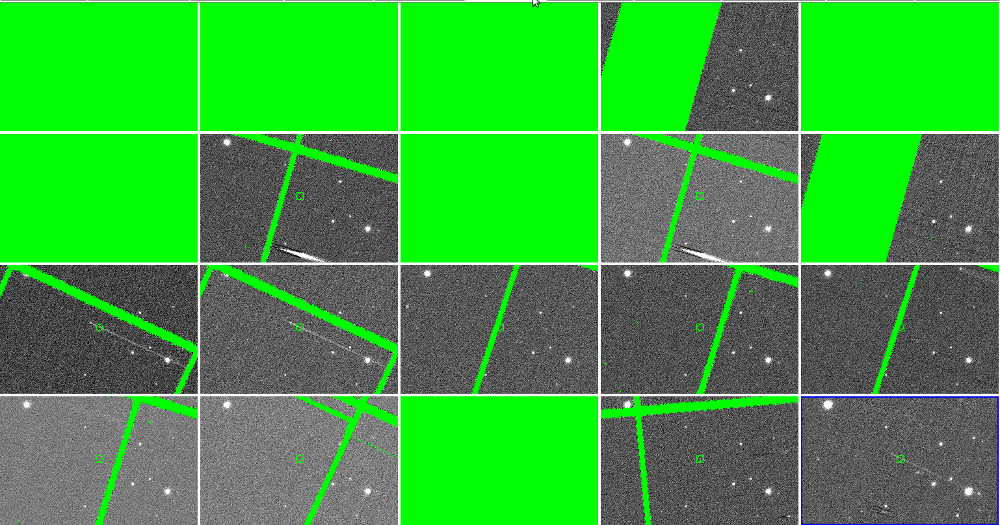
The psfQf cut shows that the bulk of the "linear" features are removed when psfQf > 0.85. These linear features seem to largely be detections at the edge of the cell, as can be seen by comparing the pattern in the meandetections.jpg image to the edge pattern visible in the warp mosaic.
Stack detections
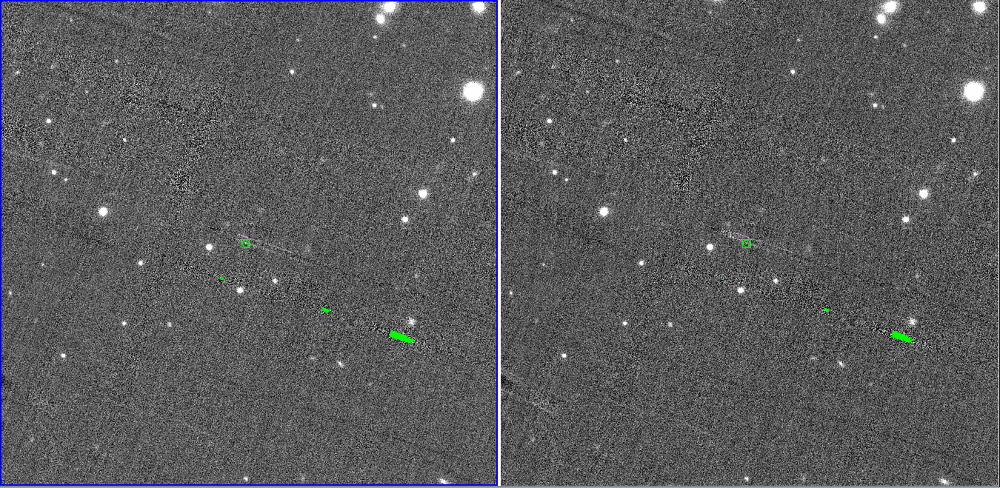
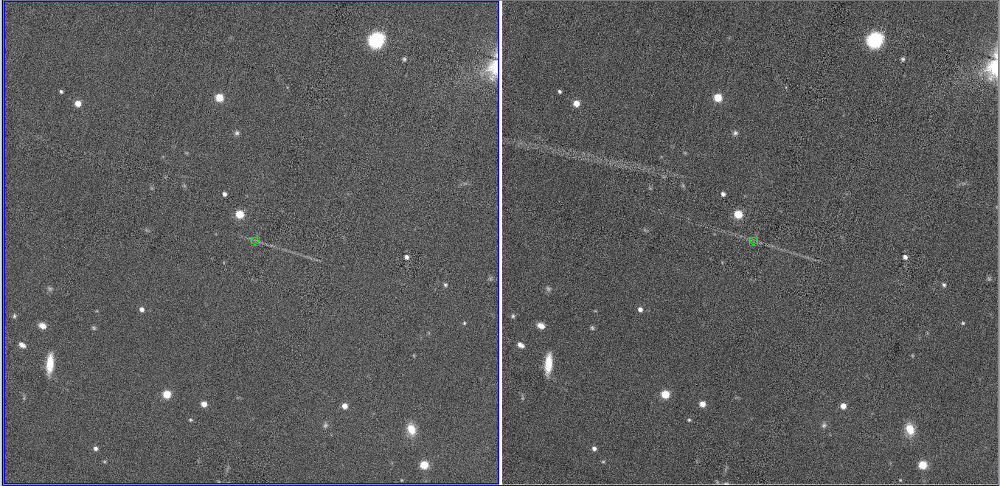
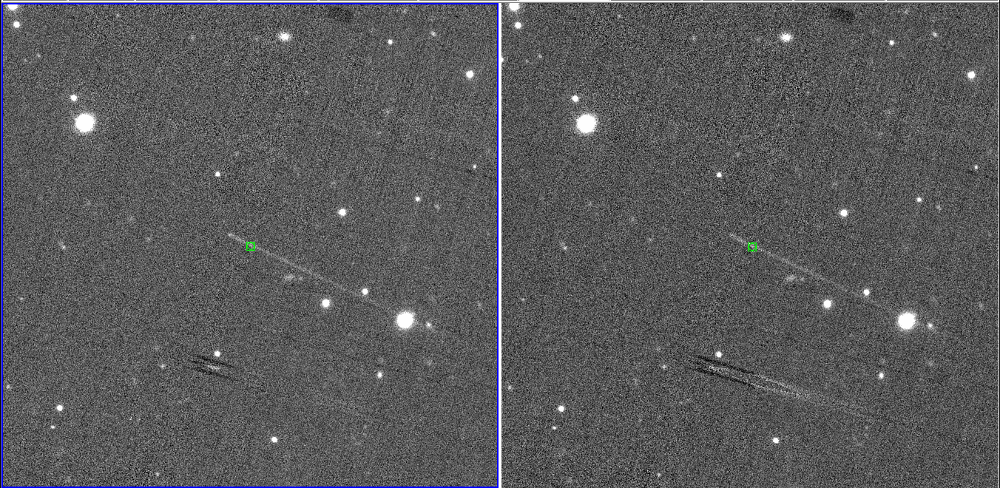
The detections from the meanstackdetections.jpg do seem to more consistently ignore the features visible on the mean image. I've highlighted two examples where this is not the case:

ppStack largely rejects the pixels that make up the bright reflection ghost, but a small region shows this printing through somewhat (at the ~few sigma level it seems). Comparing the shape of this region with the stack detections in this region shows that this bright feature is causing some false detections, but at a substantially reduced rate compared to the warp detections.

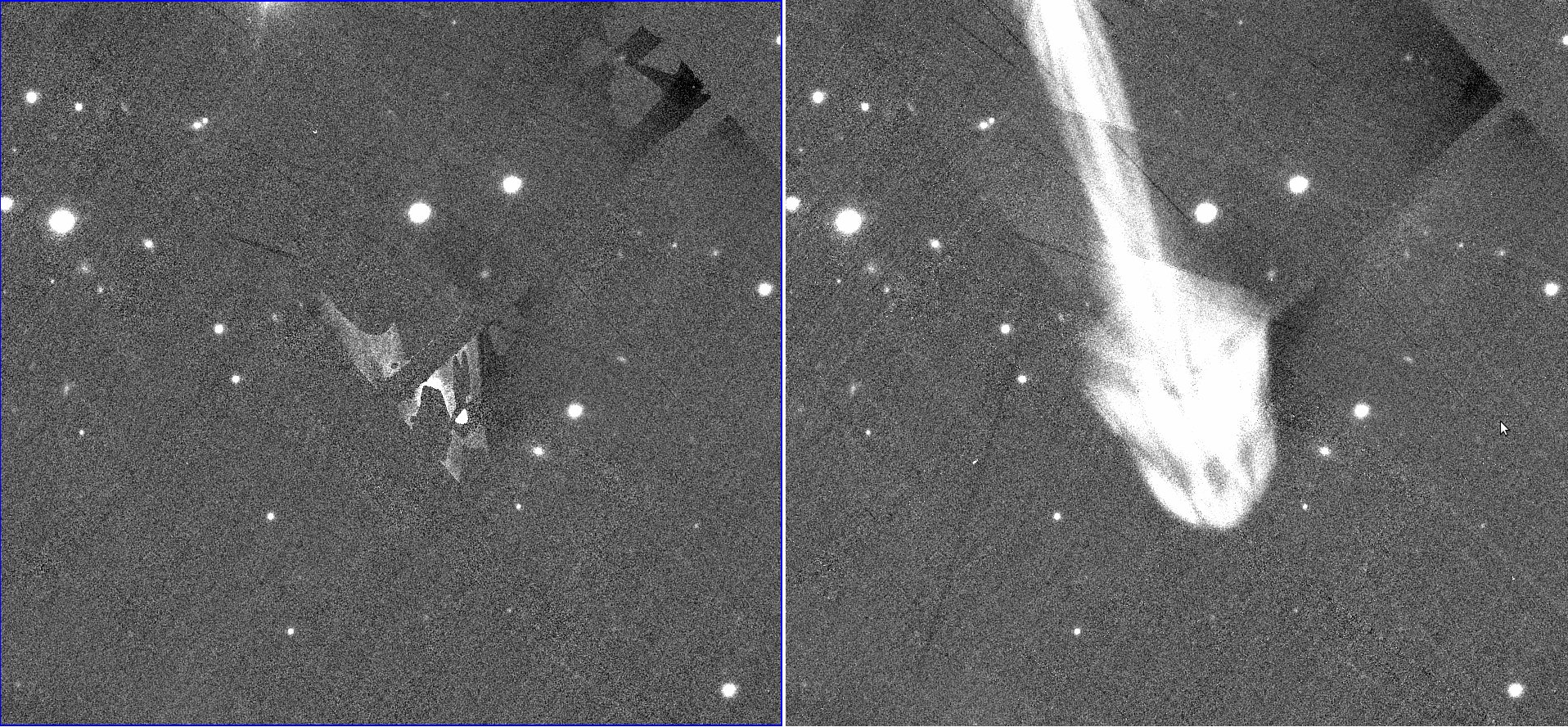
Although this bad edge chip has a mask, some pixels are masked with the "SUSPECT" bit, allowing ppStack to consider them for the stack. Clearly, it's not being quite strict enough in rejecting these pixels, as some of the bright values pop through (corresponding to a pixel that had only the SUSPECT bit set). Comparing this to the stack detections shows that these bright pixels do create detections (the pixels are >5 sigma deviations from their neighbors, so this is understandable). Note however, that these objects should have moment values that are clearly wrong. A grouping of a few pixels is substantially smaller than a PSF.
Summary
ppStack's outputs are superior to a simple mean, and reject the majority of deviant input pixels. This process is not perfect, and there are probably improvements that could be applied to the algorithm. The detections from ppStack seem to be largely reliable from a quick scan of the meanstackdetections plot and the ppStack output. Individual frame detections are improved greatly by the psfQf cut, but some non-astrophysical sources can still sneak through, such as the clumps around the end of the bright reflection ghost (the model for this does not fully model the "bloom").
Attachments (18)
- mean_withmasks.jpg (348.2 KB ) - added by 14 years ago.
- ppStack_BEC_closeup.jpg (748.7 KB ) - added by 14 years ago.
- ppStack_ghost_closeup.jpg (752.2 KB ) - added by 14 years ago.
- ppStack_mean_comp.jpg (734.3 KB ) - added by 14 years ago.
- warp_mosaic.jpg (350.8 KB ) - added by 14 years ago.
- mean2.jpg (1.7 MB ) - added by 14 years ago.
- meanstackdetections2.jpg (1.6 MB ) - added by 14 years ago.
- meandetections2.jpg (1.6 MB ) - added by 14 years ago.
- btA.png (562.8 KB ) - added by 14 years ago.
- btB.png (422.3 KB ) - added by 14 years ago.
- btC.png (681.4 KB ) - added by 14 years ago.
- btD.png (562.3 KB ) - added by 14 years ago.
- btE.png (709.4 KB ) - added by 14 years ago.
- scA.png (1.4 MB ) - added by 14 years ago.
- scB.png (810.8 KB ) - added by 14 years ago.
- scC.png (691.2 KB ) - added by 14 years ago.
- scD.png (740.2 KB ) - added by 14 years ago.
- scE.png (644.9 KB ) - added by 14 years ago.