| Version 1 (modified by , 13 years ago) ( diff ) |
|---|
Gaussian 1-D Convolution
In an attempt to remove some of the unexpected behavior in stacking and differencing, a new mode was added to the pmSubtraction code. This mode defines a new kernel type PM_SUBTRACTION_KERNEL_SIMPLE which breaks out from the current Alard-Lupton PSF matching code into work-alike replacement.
Mathematically, instead of attempting to do the PSF matching with a sum of the product of Gaussians and polynomials, this SIMPLE kernel examines only the measured FWHM values for the two PSFs. From these values, a Gaussian kernel is constructed with sigma_kern2 = (FWHM_large2 - FWHM_small2)/(2 sqrt(2 log 2))2. The smaller PSF image is then convolved by this kernel and the results returned.
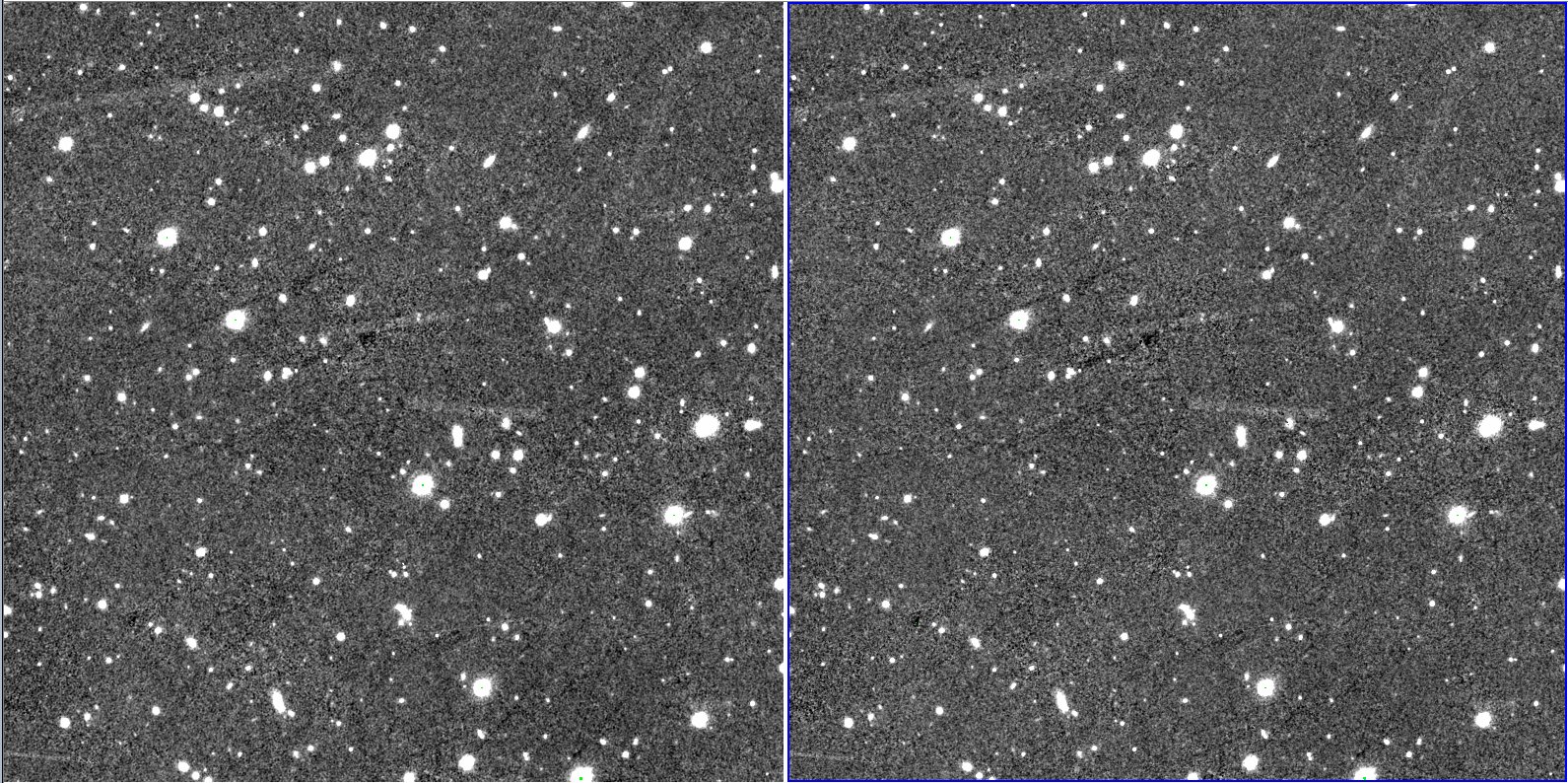
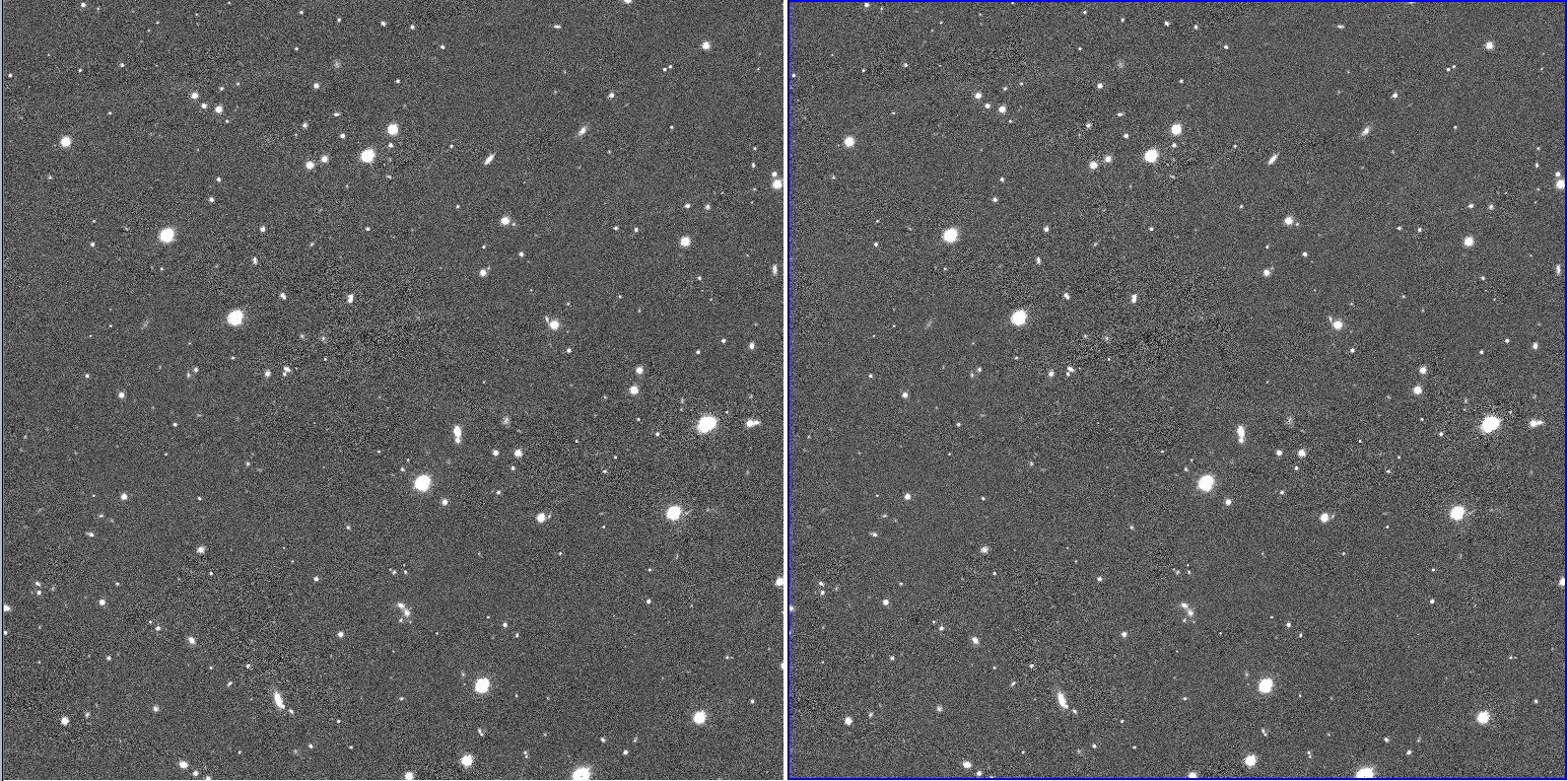
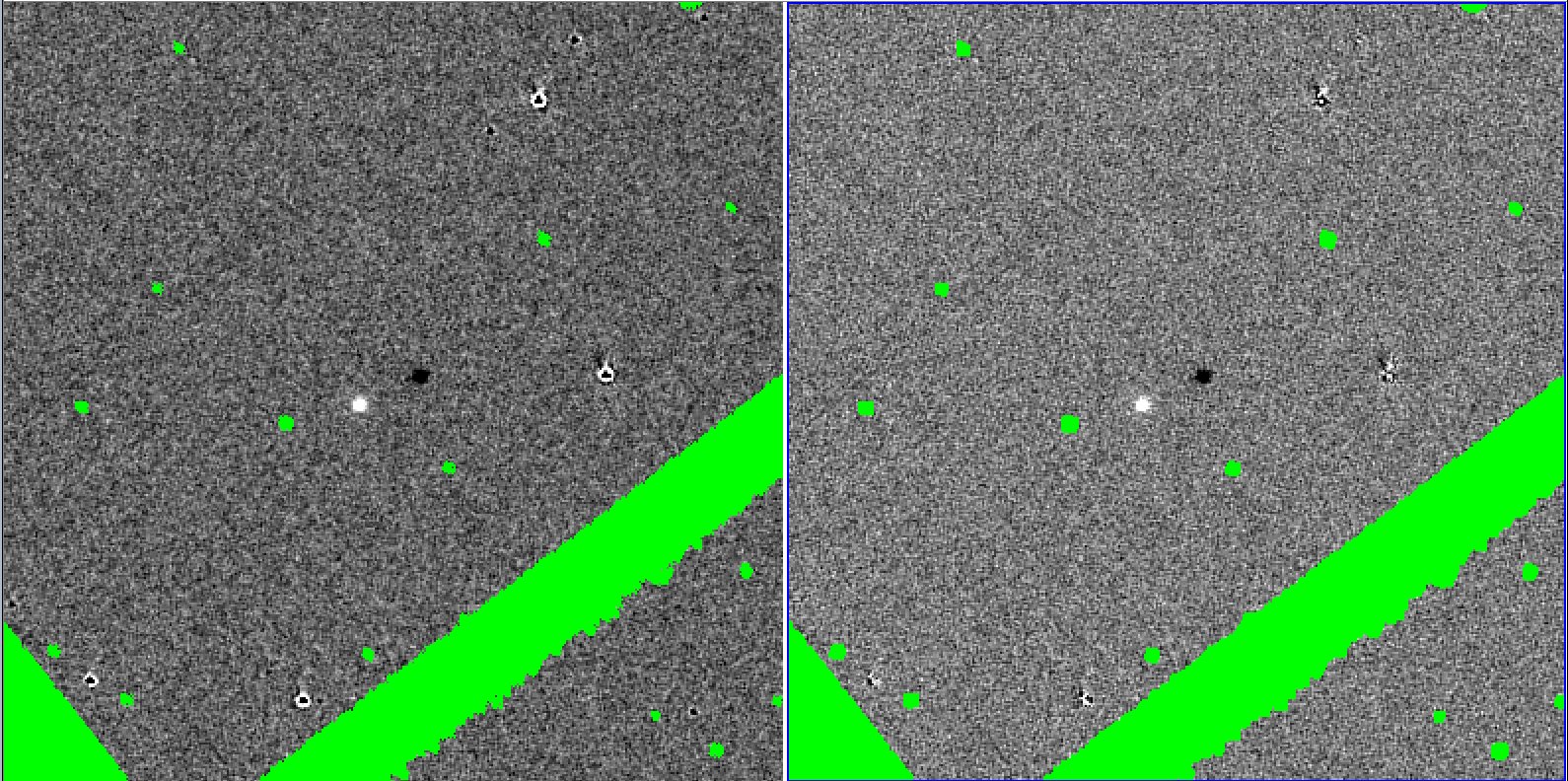
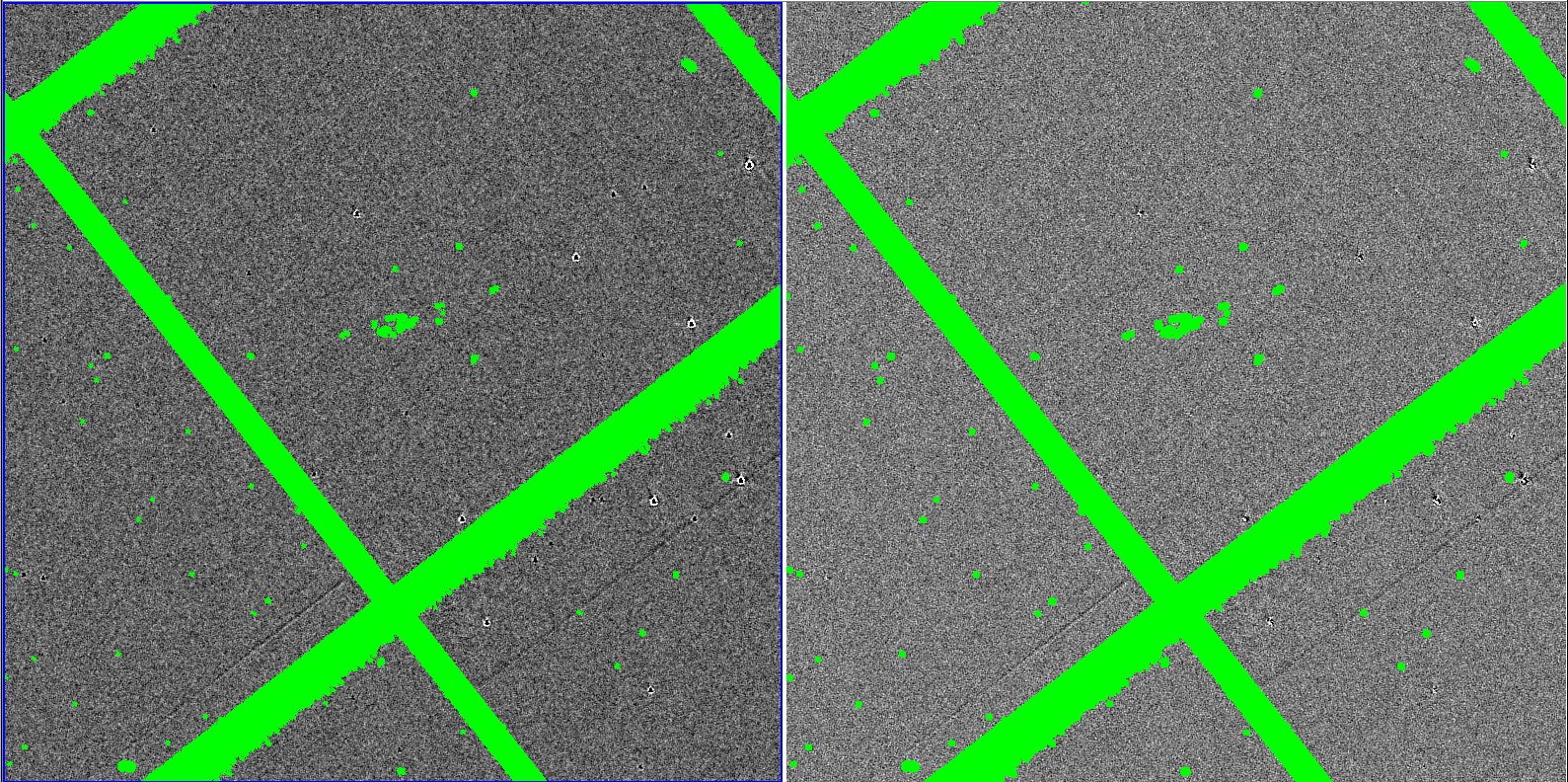
Below are a series of comparison images from tests with real GPC1 data. The left panel shows the standard pmSubtraction kernels, and the right shows the new SIMPLE kernel.
Convolved stack:

Unconvolved stack:

Warp-warp diff:

Real object zoom in diff:

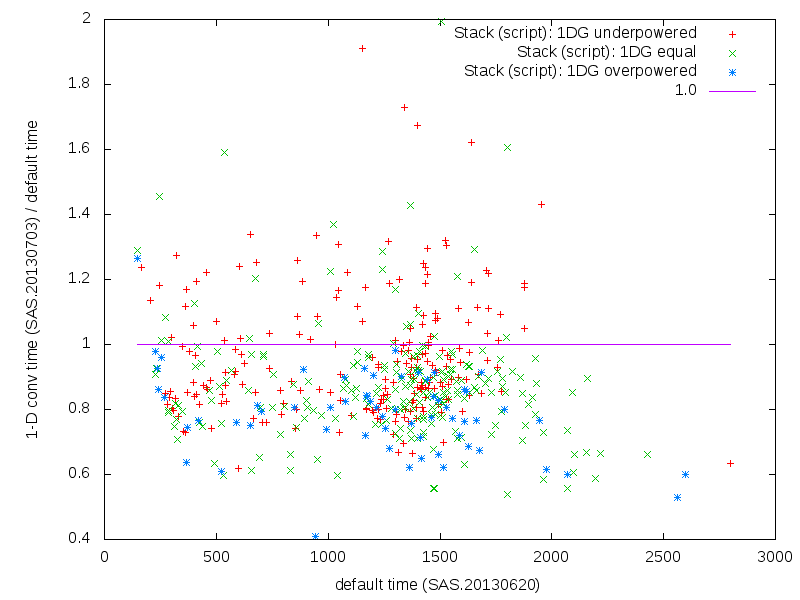
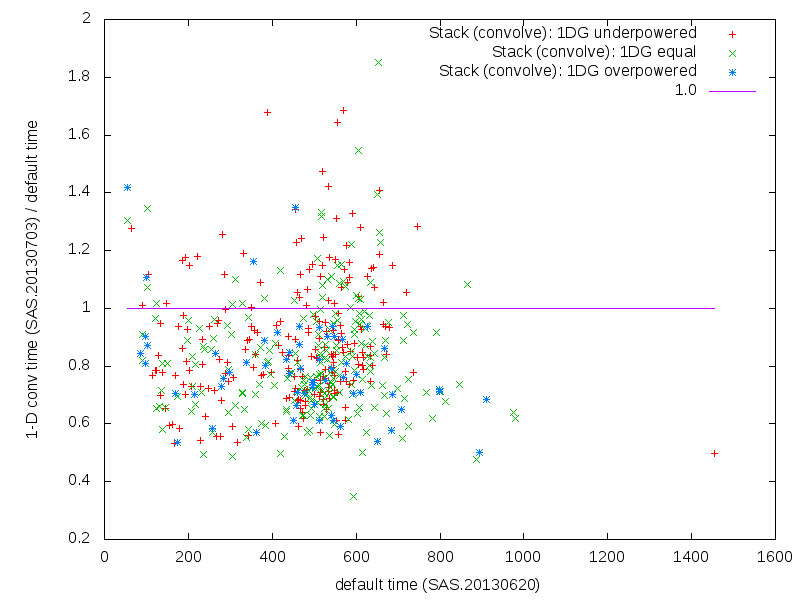
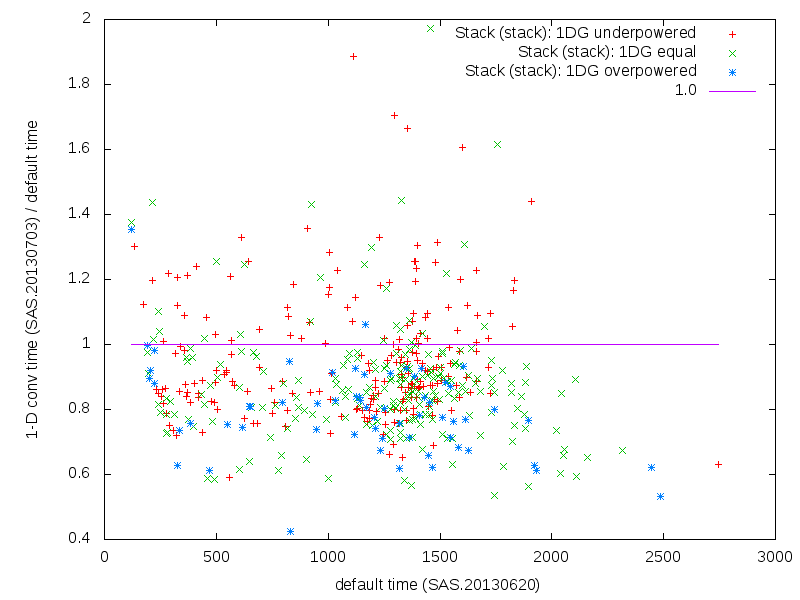
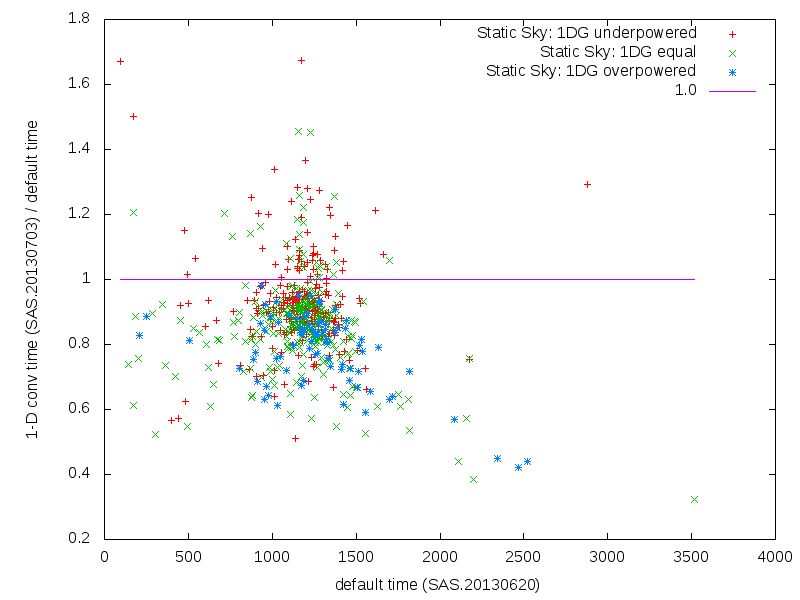
After processing the SAS stacks and static sky with the 1-D Gaussian convolution, we can compare the timing for these stages between the two PSF matching codes using the dtime values listed in the database. For all subsequent plots, the x-axis shows the default time with the pmSubtraction kernels (SAS.20130620), and the y-axis shows the ratio of simple/default (SAS.20130703/SAS.20130620).


Attachments (8)
- 1dg_convolved_stack.jpg (527.7 KB ) - added by 13 years ago.
- 1dg_unconvolved_stack.jpg (574.7 KB ) - added by 13 years ago.
- 1dg_diff_object.jpg (446.6 KB ) - added by 13 years ago.
- 1dg_diff.jpg (551.2 KB ) - added by 13 years ago.
- stack_script.png (13.4 KB ) - added by 13 years ago.
- stack_conv.png (13.4 KB ) - added by 13 years ago.
- stack_stack.png (13.4 KB ) - added by 13 years ago.
- static_sky.png (12.6 KB ) - added by 13 years ago.